If you suffer a slip and fall accident in Nevada, you may try to bring a negligence lawsuit against the property owner or tenant. In Clark County, many of the personal injury lawsuits against Las Vegas hotels stem from dangerous flooring conditions.
In order to win a slip and fall case, you have to prove three things:
- There was a hazardous surface on the premises;
- The property owner or manager knew (or should have known) about the hazard;
- The hazard caused your injuries.
If you prevail in your slip and fall lawsuit, you may be awarded compensatory damages to pay for your:
Even if you were partially to blame for your injuries, you may still be able to win a personal injury lawsuit. Under Nevada’s comparative negligence laws, property owners or tenants owe you damages whenever they were at least 50% at fault.
In practice, the vast majority of Las Vegas slip and fall lawsuits settle without a trial.
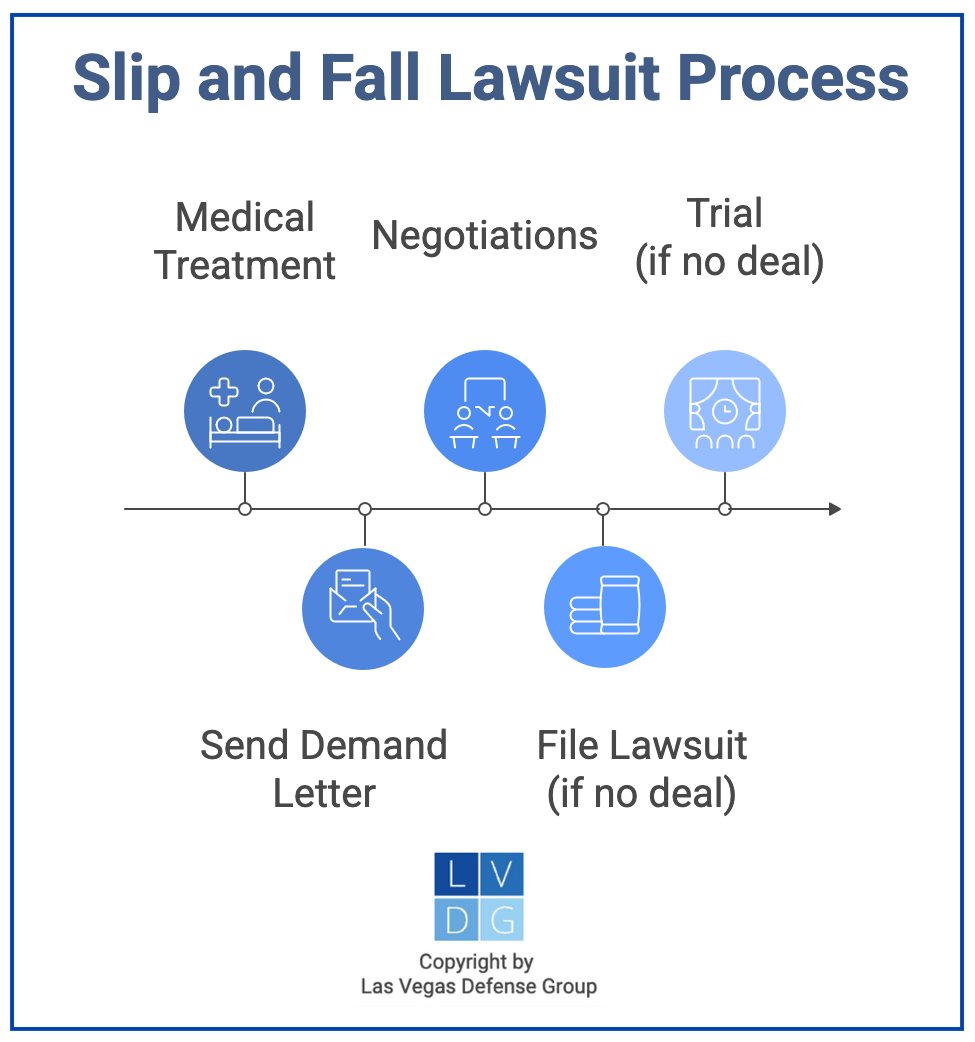
In this article, our Nevada personal injury attorneys will address the following key issues regarding Las Vegas slip and fall lawsuits:
- 1. Overview
- 2. Dangerous Surfaces
- 3. Injuries
- 4. Hotel Falls
- 5. Grocery Falls
- 6. Defenses
- 7. Damages
- 8. Evidence
- 9. Statute of Limitation
- Frequently Asked Questions
- Additional Reading
1. Overview
Slips and falls are location-specific accidents. Therefore, under Nevada’s doctrine of premises liability, the people in charge of the home or business where the fall occurred are the most likely defendants. These include the:
- property owner,
- tenant, and/or
- occupant.
(Depending on the case, you may also be able to sue any contractors, maintenance companies, or merchants who worked on the property.)
In most slip and fall cases, you sue the at-fault party for negligence. Negligence has four “elements”:
- The defendant owed you a duty of care (keeping the premises safe);
- They breached this duty (failed to keep the premises safe);
- This breach injured you (the fall);
- Your injuries resulted in damages (medical bills and other expenses).1
Here, the defendant’s “duty of care” consists of taking reasonable steps to:
- follow safety protocols and maintain the premises to prevent foreseeable accidents,
- fix any dangerous floors as soon as possible, and/or
- warn you of the dangerous floor so you can avoid it.
Should your case reach trial, you have to prove negligence “by a preponderance of the evidence.” This is the legal way of saying that it is more likely than not that the defendant’s negligence caused your fall.2
Note that if the property was a business, the business is “vicariously liable” for the negligent actions of its employees. So if an employee is at fault for failing to put out a “wet floor,” sign, you could sue the business instead of the employee.3
2. Dangerous Surfaces
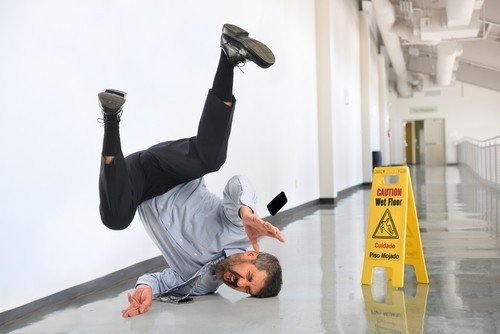
Dangerous flooring lawsuits in Nevada typically involve people slipping and falling in
- hotels,
- casinos,
- shops,
- restaurants,
- sidewalks, and
- parking lots.
Specifically, dangerous surfaces and conditions may arise when landowners and tenants fail to take preventative and remedial measures.4
3. Injuries
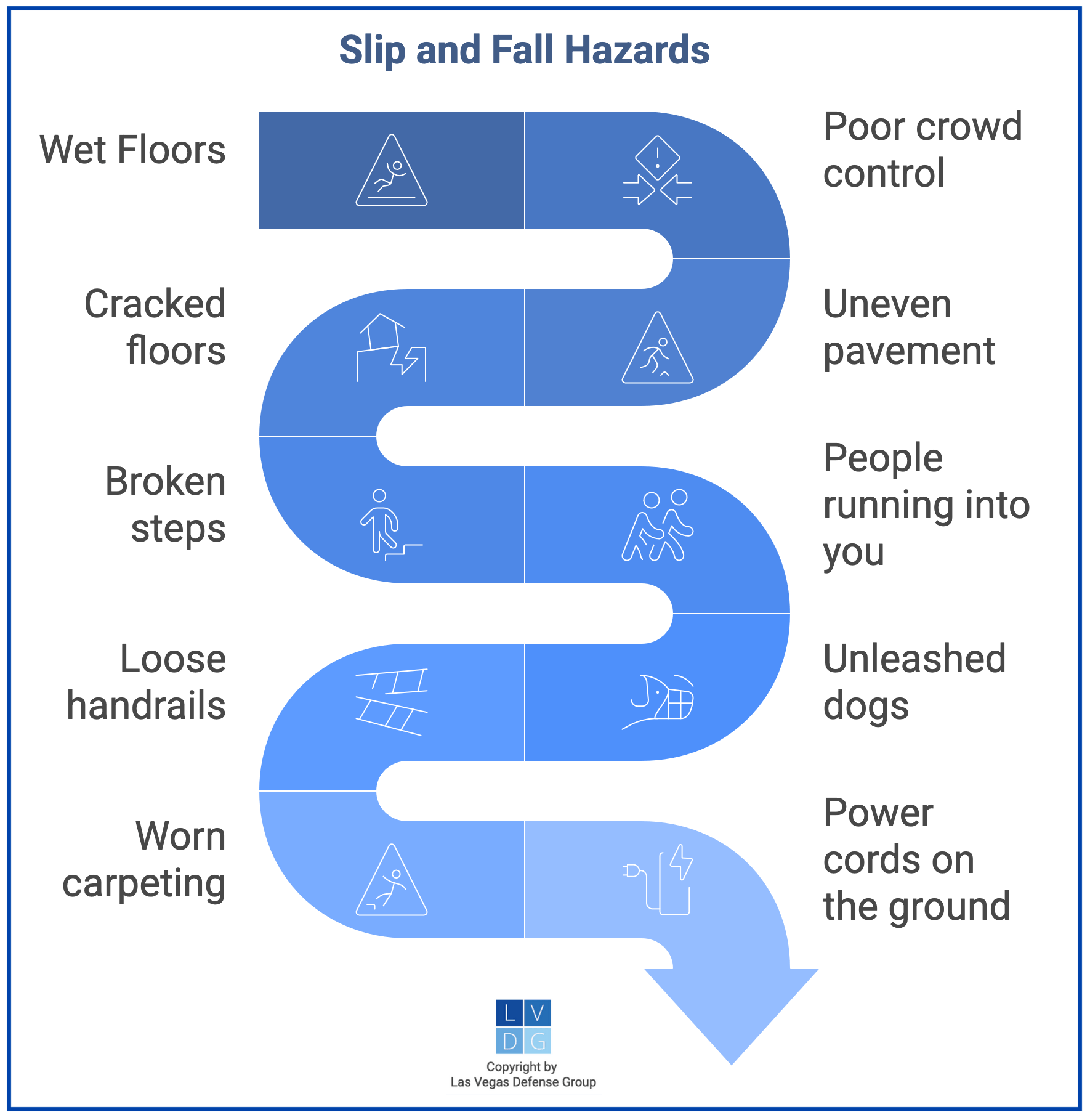
The National Floor Safety Institute reports that slips and falls result in more than 1 million ER visits each year. 5 In Las Vegas, slip and falls often occur in “productivity zones,” such as buffet spreads in hotels or checkout counters in supermarkets.
Even relatively minor falling injuries can interfere with your daily activities, such as driving, cooking, dressing, or typing. It is no surprise that the elderly and people with such bone conditions as osteoporosis are most vulnerable to injuries from falling.
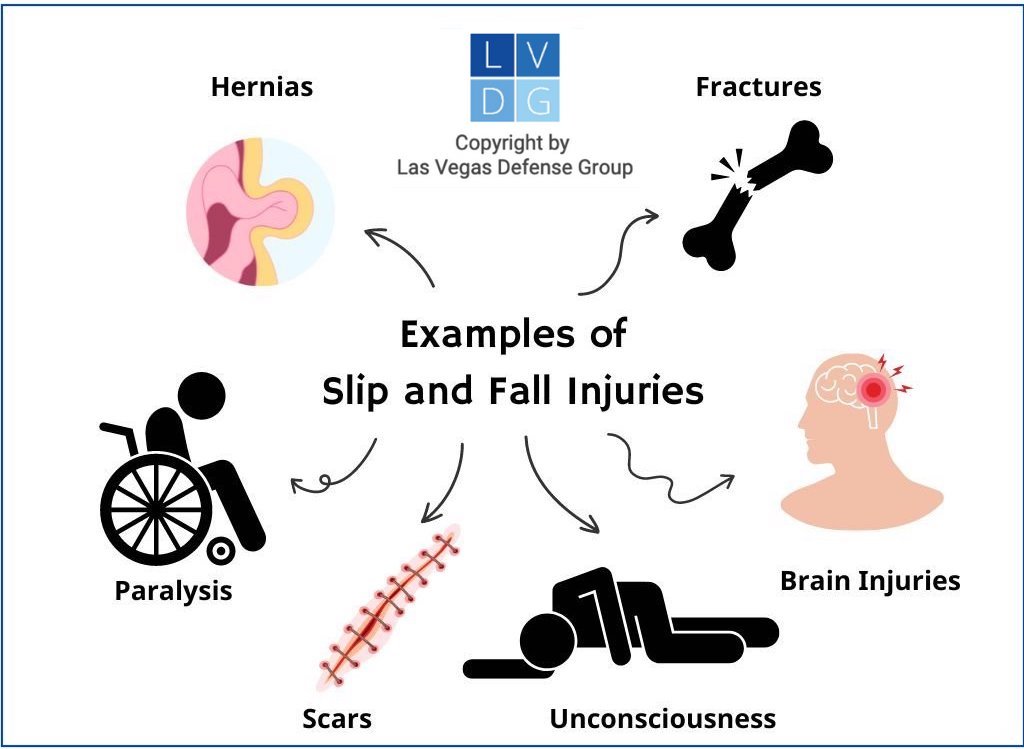
Note that falls are not the only potential hazard of dangerous flooring. For instance, flooring that contains formaldehyde can cause people to develop respiratory conditions, as in the recent Lumber Liquidators class-action lawsuit in Las Vegas.6
4. Hotel Falls
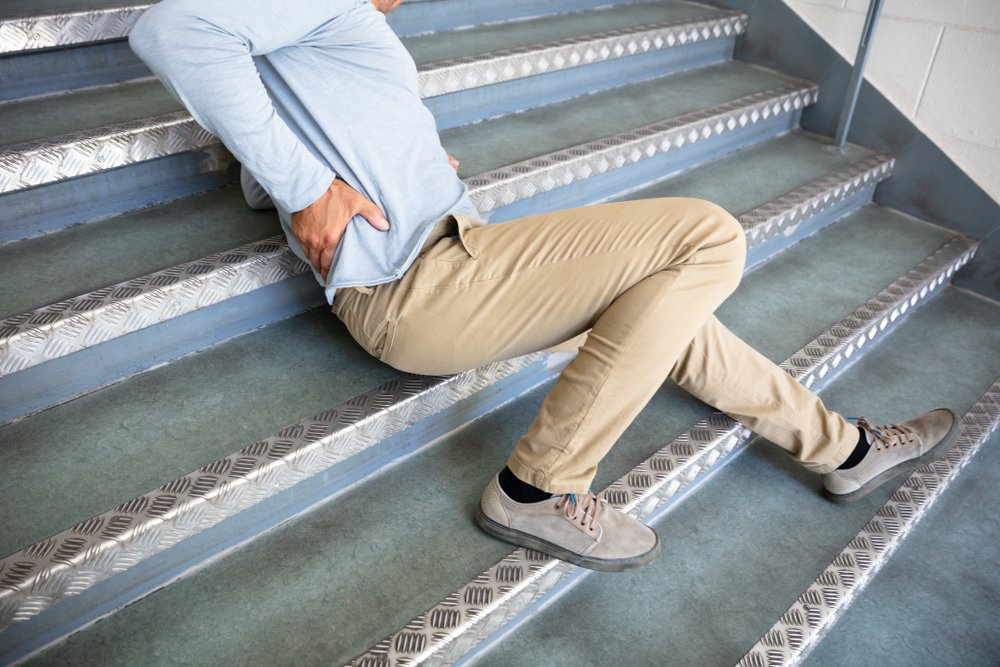
Las Vegas hotels and casinos feature a variety of flooring, each of which poses potential falling hazards. Common slip and fall hotel accidents include:
- Slipping in the shower because the bath mat is too worn to provide non-slip protection
- Tripping over frayed carpet in the casino floor, hotel room, elevators, or restaurants
- Skidding on a spilled drink by the bar or in the lobby
- Stumbling over uneven pavement outside the hotel
- Tumbling down uneven steps or a malfunctioning escalator
- Falling off defective gym equipment
- Slipping by a swimming pool, where defective drainage is causing water to pool on the tiles
Hotels have a duty to regularly inspect the premises for potential hazards and to promptly address any that are present. Depending on the location and how dangerous a particular flooring condition is, the hotel must:
- cordon the dangerous area off,
- put out caution signs by the dangerous area, and/or
- fix the hazard
Note that patrons who trespass into staff-only areas of the hotel and suffer a fall may have a more difficult time proving negligence than if the accident occurred in the hotel’s public areas. However, depending on the case, even trespassers may be able to recover money damages from hotels.
5. Grocery Falls
Slipping and falling are very common in supermarkets, where virtually every grocery item can become a tripping hazard if it drops onto the floor. Furthermore, shoppers often have their eyes up searching store shelves, oblivious to any spills.
Similar to hotel patrons, supermarket patrons are considered “invitees” under Nevada law. This means the store has a strong duty to search for potential hazards and address them promptly and actively.
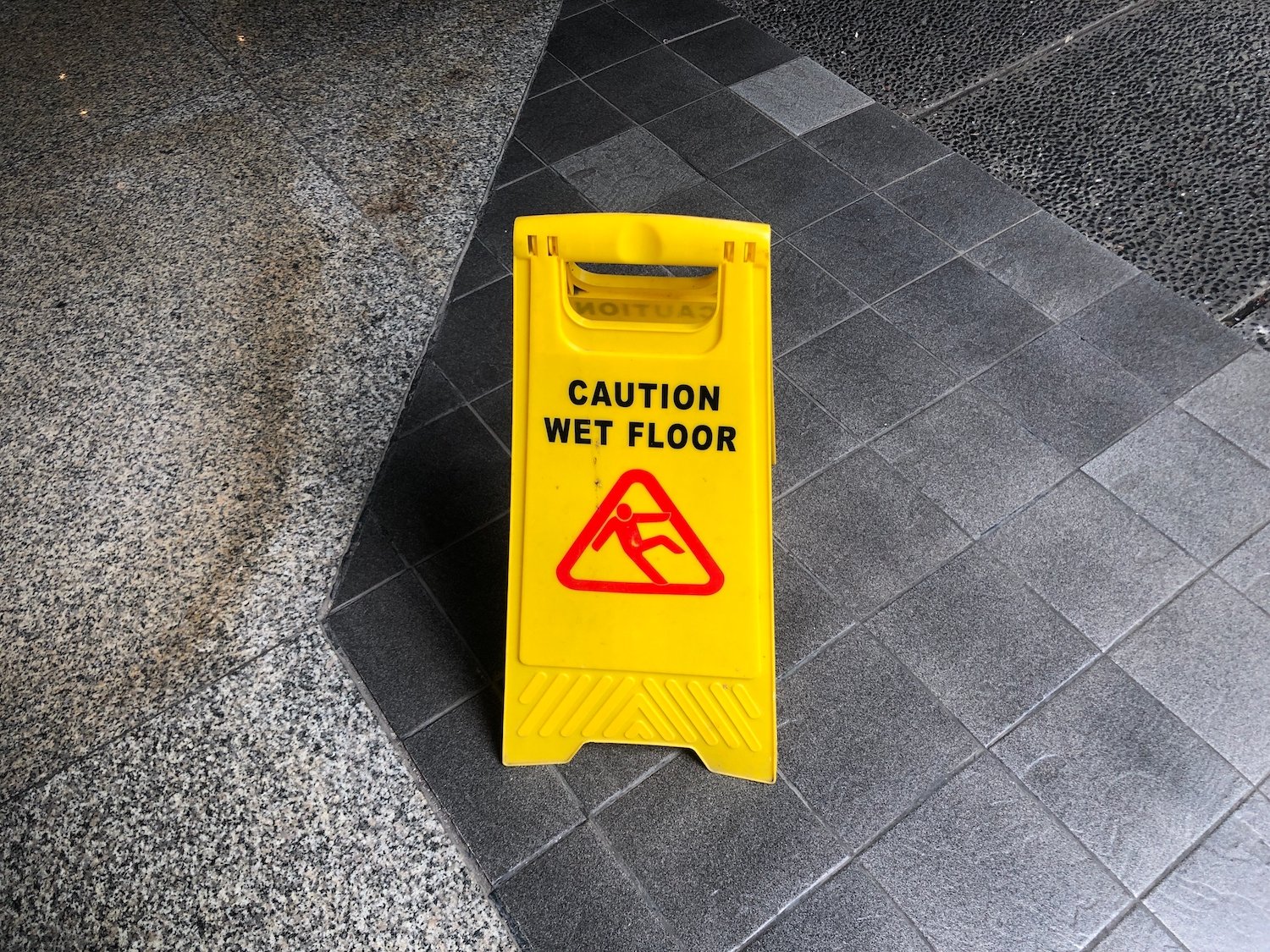
Supermarket staff are supposed to regularly patrol the aisles in search of hazardous conditions and respond quickly when customers alert them to them. Once staff are aware of a problem, the staff must:
- mop up the spill,
- cordon off the area, and/or
- put out “caution: wet floor” or other applicable sign
Note that a supermarket’s high standard of care towards its customers extends to all areas of the supermarket open to the public. This includes the self-checkout aisles, where customers—not staff—handle the inventory.7
6. Defenses
Many defendants carry business or homeowners’ insurance in case someone is injured on their property. These insurance companies, in turn, hire “insurance defense” attorneys who have one goal: Pay out as little as possible.
There are many strategies these attorneys may try to implement when defending against negligence lawsuits, such as trying to show that:
- The defendant sufficiently warned against the falling hazard.8
- The falling hazard was open and obvious.9
- Your injuries were caused by preexisting conditions.10
- You failed to exercise due care and reasonable caution.11
- An intervening cause was responsible for the injury.12
Note that if you signed liability waivers prior to your accident, you may still be able to recover damages: Some liability waivers are not enforceable, and others are limited to certain narrow circumstances that may not cover your injuries.
7. Damages
In a standard negligence case, you sue defendants for “compensatory damages,” such as:
- Medical bills: This includes expenses such as hospital bills, outpatient doctor visits, rehab, physical therapy, home health care, and medications.
- Lost wages: This includes any money you were unable to earn while you were injured.
- Future lost wages: This includes any money you will be unable to earn due to your injuries.
- Pain and suffering: This comprises physical pain, loss of enjoyment of life, and mental anguish.
When the defendant’s behavior that caused the injury was malicious or otherwise egregious, the court can take the rare move of ordering the defendant to pay punitive damages as well.13
Note that if the victim died from their injuries, the victim’s spouse, children, parents, siblings, or other next-of-kin may be able to bring a wrongful death lawsuit against the defendant. Potential damages include loss of support, loss of companionship, funeral expenses, medical expenses, and grief and sorrow.
8. Evidence
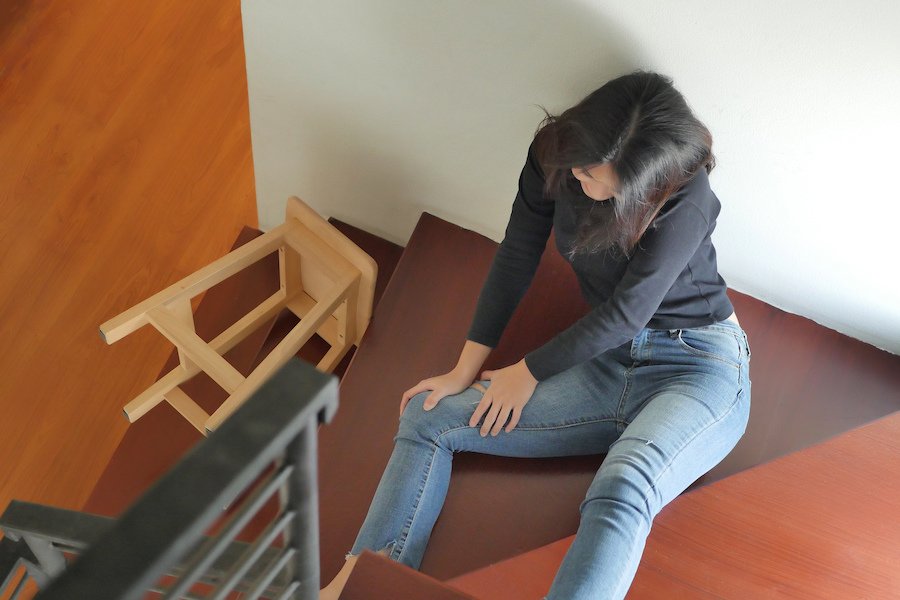
One of the most important functions of personal injury attorneys is compiling evidence that demonstrates or suggests that the defendant breached its duty of care towards you.14 Common evidence in slipping and falling lawsuits include:
- building codes and maintenance records
- eyewitnesses and surveillance video
- residue from your shoes or clothes from the time of the accident
- medical records and photographs
- expert medical testimony
- testimony by accident reconstruction experts
If you have a fall, use your phone to take photos and videos of the scene right away. This evidence may prompt the defendant to make a generous slip and fall settlement offer upfront. Most slip and fall cases settle without a trial.15
9. Statute of Limitations
Under Nevada personal injury law, there is typically a two-year statute of limitations to sue the at-fault parties following a slip and fall accident. There are exceptions depending on the situation, so consult with your lawyer as soon as possible.16
Frequently Asked Questions
What is the statute of limitations for a slip and fall lawsuit in Nevada?
Under Nevada law (NRS 11.190), you generally have two years from the date of the slip and fall accident to file a personal injury lawsuit against the negligent property owner. If you miss this two-year deadline, the court will likely dismiss your case, and you will be barred from recovering compensation.
If the fall resulted in a fatality, the family has two years from the date of the victim’s death to file a wrongful death lawsuit.
Can I still win my slip and fall case if I was partly to blame?
Yes. Nevada operates under a “modified comparative negligence” rule, often called the 50% rule. This means you can still recover damages as long as you were not more than 50% at fault for the accident.
However, your total compensation will be reduced by your percentage of fault. For example, if you are awarded $100,000 but the court finds you were 20% responsible for not watching your step, you will receive $80,000.
How much is a slip and fall settlement worth in Las Vegas?
There is no average settlement for a slip and fall case, as the value depends entirely on the specifics of the accident. Compensation is determined by the severity of your injuries, the cost of your current and future medical bills, lost wages, and your pain and suffering.
Minor sprains might settle for a few thousand dollars, while catastrophic injuries (like traumatic brain injuries or spinal damage) suffered at a hotel or casino can result in six- or seven-figure settlements.
Does a “Wet Floor” sign automatically protect a business from liability?
Not necessarily. While putting up a caution cone or warning sign is part of a business’s “duty of care,” it does not automatically absolve them of liability.
If the sign was placed in a poorly lit area, was hard to see, or if the business left the hazard unattended for an unreasonable amount of time without actually cleaning it up, they may still be found negligent under Nevada premises liability laws.
What should I do immediately after slipping and falling in a casino or supermarket?
If you fall on someone else’s property, you should take the following steps to protect your health and your legal rights:
- Seek medical attention: See a doctor immediately, even if you feel fine, as adrenaline can mask injury symptoms.
- Report the accident: Notify the store manager or casino security and ask them to file a formal incident report. Request a copy for yourself.
- Document the scene: Use your phone to take photos and videos of the exact hazard that caused your fall (e.g., spilled liquid, frayed carpet, uneven concrete) before it gets cleaned up.
- Get witness info: Collect names and contact information from anyone who saw the fall.
- Contact a lawyer: Speak with a Nevada personal injury attorney before giving any recorded statements to the property owner’s insurance company.
Will my Nevada slip and fall case have to go to trial?
Most slip and fall cases do not go to trial. Instead, they are resolved through out-of-court settlements with the property owner’s commercial liability insurance company. However, if the insurance company denies liability or refuses to offer a fair settlement that covers your damages, your attorney may advise filing a lawsuit and taking the case to court to fight for maximum compensation.
Additional Reading
For more information, refer to our related articles by our Las Vegas slip and fall lawyers:
- What’s the statute of limitations for “slip and fall” in Nevada? How long do you have to sue for negligence?
- Can I sue if I had a slip and fall in a Las Vegas hotel? What to do if you are injured in a hotel.
- Can I sue after falling on a slippery floor at a Vegas nightclub? Your options if you are injured in a nightclub.
- How to file a slip and fall claim in Las Vegas – 5 key steps. Guide to bringing a slip and fall lawsuit.
- I had a slip and fall in a Las Vegas hotel. Can I file a lawsuit? Your options if you are injured in a hotel.
Legal References:
- Rolain v. Wal-Mart Stores, Inc. (2013) No. 2:11-cv-01900-KJD-PAL; Hammerstein v. Jean Dev. West (1995) 111 Nev. 1471; Restatement (Third) of Torts: Physical and Emotional Harm, § 51.
- See, for example, Deiss v. Southern Pac. Co. (1936) 56 Nev. 169.
- See also Asmussen v. New Golden Hotel Co. (1964) 80 Nev. 260; Worth v. Reed (1963) 79 Nev. 351.
- NRS 41.515. See also Moore v. Primadonna Co., LLC (Nev. App. 2026) 142 Nev. Adv. Op. 6.
- National Floor Safety Institute.
- Carrie Geer Thevenot, Report on Lumber Liquidators flooring leads to Vegas lawsuits, Las Vegas Review-Journal (March 19, 2015).
- Sprague v. Lucky Stores, (1993) 109 Nev. 247.
- Harrington v. Syufy Enters. (1997) 113 Nev. 246, 250 (“[T]he obvious danger rule only obviates a duty to warn. It is inapplicable where liability is predicated upon acts other than a failure to provide adequate warning of a dangerous condition. Consequently, even where a danger is obvious, a defendant may be negligent in having created the peril or in subjecting the plaintiff to the peril.”).
- Foster v. Costco Wholesale Corp. (2012) 128 Nev. 773.
- State Indus. Ins. Sys. v. Kelly (1983) 99 Nev. 774; Perez v. Las Vegas Medical Ctr. (1991) 107 Nev. 1; FGA, Inc. v. Giglio (2012) 128 Nev. 271.
- NRS 41.141; Humphries v. Eighth Judicial Dist. Court of State (Nev. 2013) 312 P.3d 484.
- Bower v. Harrah’s Laughlin, Inc. (2009) 125 Nev. 470.
- NRS 42.005.
- See Eldorado Club v. Graff (1962) 78 Nev. 507. Worth v. Reed (1963) 79 Nev. 351, 356 (“A slip and fall, standing alone, does not prove either that she was, or was not, negligent.”).
- Same. Note that after someone suffers a fall, it is common for the landowner or tenant to quickly repair the dangerous flooring hazard. Logically, these remedial measures seem like evidence of the defendants’ guilt. However, Nevada law states that courts may not use evidence of these post-accident remedial measures as evidence that the defendants breached their duty of care towards you. Instead, personal injury attorneys focus on the defendants’ actions prior to and during the fall to show that the defendants failed to act reasonably to prevent foreseeable falls. NRS 48.095.
- NRS 11.190; NRS 11.300; NRS 11.310.