Dangerous flooring causes countless slip-and-fall accidents in Nevada hotel/casinos, restaurants, bars, arenas, stores, parks, schools, and private homes. To recover money for their injuries, dangerous flooring victims can bring negligence and/or products liability claims against the responsible parties.
Whom You Can Sue
The four parties that I sue on behalf of dangerous flooring victims in Nevada are:
- The property owner/lessor – If the incident occurred in a home, business, or other property, the owner may be liable for allowing a dangerous flooring condition to exist. Under premises liability law, owners and tenants have a duty to keep property reasonably safe.
- Flooring installer – If the flooring was incorrectly or negligently installed, the installation company could be sued for failing to follow safety protocols.
- General contractor – For new construction, remodeling, or other projects involving new flooring, the general contractor overseeing the work may be liable if proper protocols were not followed.
- Flooring manufacturer – If a defect in the design or manufacturing of the flooring itself caused the incident, the maker of the flooring could be held responsible under products liability law.
What Legal Claims You Can Bring
In my experience, dangerous flooring lawsuits involve one or both of the following claims: negligence and/or products liability.
Negligence
In dangerous flooring lawsuits against the property owner, flooring installer and general contractor, you would bring a negligence claim. Negligence has four elements that you need to prove:
- The defendant had a duty of care towards you;
- The defendant breached this duty of care;
- This breach harmed you;
- Your injuries resulted in damages.1
Example: Meg slips on an uneven paving stone outside of a Las Vegas casino. Here, Meg could bring negligence lawsuits against:
• the casino on the basis of premises liability for failing to keep the grounds safe for customers; and/or
• the installer who did a subpar job installing the stone.
Other examples of negligence related to flooring accidents that I frequently see include:
- Improper installation of flooring
- Failure to fix loose or uneven tiles/boards
- Not cleaning up liquid spills promptly
- Not placing adequate mats in transition areas
- Poor lighting conditions
- Allowing trip hazards like cords or clutter in walkways
- Failure to post wet floor signs after cleaning or leaks
- Selecting an inappropriate type of flooring for the location
To help prove negligence occurred, I work with investigators to compile evidence like photos, witness statements, receipts, installation manuals, and medical records.
Products Liability
If the dangerous flooring was due to a manufacturing defect in the flooring itself, you may have a product liability claim. The three types of defects are:
- Design Defect – The flooring product was designed in a dangerous manner;
- Manufacturing Defect – An error occurred during production, causing flaws; and
- Marketing Defect – The risks of the flooring were not adequately disclosed.
Manufacturers are held strictly liable, meaning they are responsible regardless of fault. Instead, you must prove that:
- The product was defective,
- the defect existed when it left the manufacturer’s possession, and
- it directly caused injury.2
If You Were Partly At Fault
Nevada’s modified comparative negligence law allows you to recover damages for your injuries as long as you were no more than 50% at fault. The court then takes your total damages and reduces them by your percentage of fault: The difference is what you take home.3
Example: Pam is running through a supermarket when she slips and breaks her leg on some wet flooring. Pam sues the supermarket for $10,000 in damages for failing to put out a “wet floor” sign, but the court finds her 50% at fault for running. Therefore Pam can receive $5,000 in damages (half of $10,000).
What Money You Can Win
In every dangerous flooring lawsuit, I pursue all your compensatory damages such as:
- Medical expenses, both current and future;
- Lost wages and decreased earning capacity; and
- Pain and suffering, which includes loss of enjoyment of life and disfigurement or disability
If wrongful death cases, I also pursue reimbursements for funeral expenses and “loss of support” for the family.
Ultimately, the degree of the injuries determines the potential payout. In my experience, venues prefer to negotiate out of court and offer a favorable settlement in order to avoid negative press.
How Long You Have To Sue For Dangerous Flooring
The statute of limitations to bring a negligence lawsuit in Nevada is two years after you discover you are injured. There may be exceptions depending on your case, so contact an attorney as soon as possible.4
Examples Of Dangerous Flooring
There are many types of flooring that could potentially cause slips, trips, and falls if not properly installed, maintained, or designed:
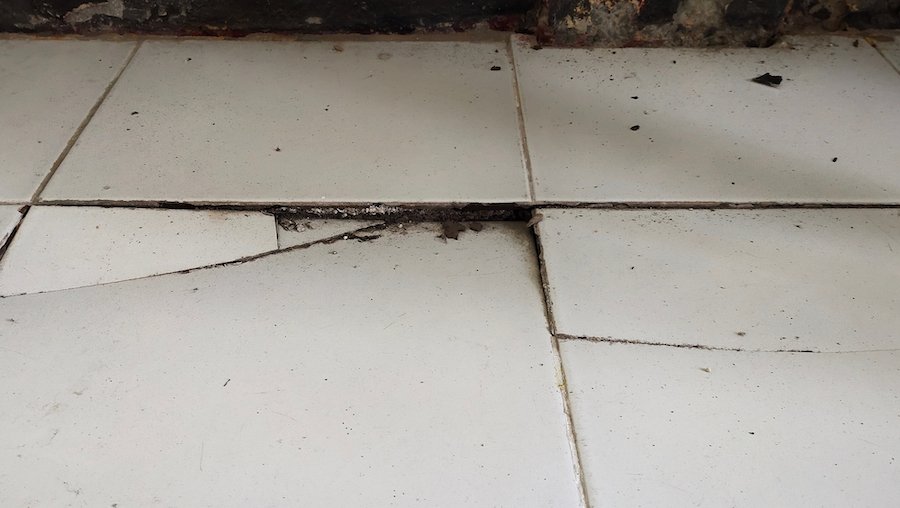
- Tile – Grout can become cracked or uneven, and tiles may become loose or slick.
- Laminate – Improper seam alignment can create ridges. Plus the surface can become scratched over time.
- Vinyl – Tears, holes, or lifting seams create trip points and can peel away near heat sources.
- Hardwood – Gaps between boards, raised nails, splinters, or worn finish cause issues.
- Carpet – Worn, stretched, or improperly secured carpeting causes tripping hazards.
- Concrete – Cracks, holes, and uneven surfaces from settling occur over time. Also, sealer wears down.
- Rubber – Mats can curl up at the edges if not firmly affixed. In addition, surfaces get slick with spills or cleaning.
- Wet Areas – Bathrooms, kitchens, and entries without slip-resistant surfaces or mats pose risks.
- Transition Areas – Different types of flooring meeting without proper edging/reducers causes height differentials.
- Outdoor Entryways – Weather conditions like rain, ice, and snow can make outdoor walkways dangerous without proper maintenance.
What To Do After A Flooring Injury
If you have suffered an injury from unsafe flooring conditions in Nevada, some important steps to take include:
- Seek medical treatment and get copies of records documenting the incident and injuries.
- Take photographs of the hazardous area, including close-ups of the issues. Measure any height differentials.
- Identify witnesses and get their contact information – written statements are best.
- Keep a record of the effects on your life like lost income, costs incurred, pain suffered, and daily limitations.
- Do not make any statements accepting blame or admitting fault.
- Contact me and my team of personal injury attorneys to discuss how I will fight for the largest settlement possible in your case. We can also help you file a report with regulatory agencies like the Consumer Product Safety Commission if a defective product is involved.
Frequently Asked Questions
How much is a slip and fall settlement worth in Nevada?
There is no set “average” settlement for a slip and fall or dangerous flooring case in Nevada. The value of your lawsuit depends entirely on the severity of your injuries and your financial losses.
Settlements are calculated based on your current and future medical bills, lost wages, reduced earning capacity, and subjective damages like pain and suffering. Cases involving permanent disability or severe trauma typically result in higher payouts.
How long do I have to sue for a slip and fall injury in Nevada?
In Nevada, the statute of limitations for personal injury claims—including slip and falls caused by dangerous flooring—is generally two years from the date of the injury (NRS 11.190). Whether your injury was caused by a property owner’s negligence or a defective flooring product, you must file your lawsuit within this two-year window, or your case will likely be dismissed.
Can I sue a Las Vegas casino if I slipped on their floor?
Yes. Casinos, hotels, and restaurants in Nevada owe a “duty of care” to their patrons under premises liability law. If you slipped on a wet floor, tripped over torn carpeting, or fell due to uneven tiles, you can sue the property owner if you can prove they knew (or reasonably should have known) about the hazard and failed to fix it or put up adequate warning signs.
Can I still win a lawsuit if I was partially to blame for my fall?
Yes, thanks to Nevada’s “modified comparative negligence” laws. As long as you were no more than 50% at fault for the accident (for example, if you were looking at your phone while walking), you can still recover damages. However, your final financial award will be reduced by your percentage of fault. If you are found to be 51% or more at fault, you cannot recover any money.
Who is responsible if the flooring itself was defective?
If your injury was caused by a manufacturing, design, or marketing defect in the flooring material itself (such as tiles that shatter under normal weight or laminate that becomes dangerously slick), you may have a product liability claim. In these cases, you can potentially sue the flooring manufacturer, the distributor, or the retail store that sold the product.
What evidence do I need to prove a dangerous flooring claim?
To build a strong case against a property owner, contractor, or manufacturer, you should immediately gather evidence at the scene if you are physically able. Crucial evidence includes:
- Photos and videos of the exact hazard (for example, the puddle, the lifted carpet, or the cracked tile) before it is cleaned or repaired.
- Contact information from eyewitnesses.
- An official incident report filed with the property manager or security team.
- All medical records and bills related to your treatment.
- Surveillance footage (your attorney can send a spoliation letter to prevent the venue from deleting this video).
Additional Resources
For information on preventing slips and falls, refer to:
- Fall Protection – Overview by the Occupational Safety and Health Administration (OSHA).
- Making Fall Safety a Top Priority – Article by the nonprofit National Safety Council (NSC).
- Slip, Trip, and Fall Prevention Checklist – Checklist provided by the National Floor Safety Institute (NFSI).
- Get the Facts on Falls Prevention – Information and tips from the National Council on Aging (NCOA).
- Fall Prevention: Simple Tips to Prevent Falls – Six pointers by the Mayo Clinic.