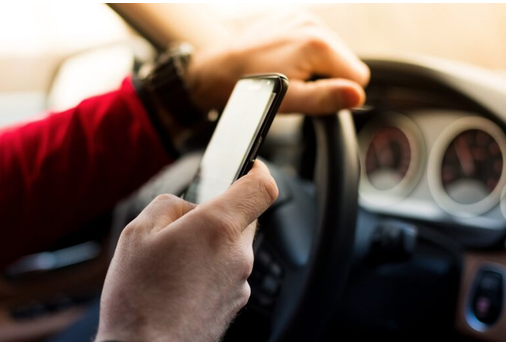
If you get hit by someone texting while driving in Las Vegas, you can file a personal injury lawsuit and demand compensation for your losses. Because texting and driving is against the law in Nevada, you may be able to prove that the driver was negligent per se, making it easier to recover compensation.
Texting While Driving – The Law
Nevada’s traffic laws forbid drivers in the state from using a handheld wireless device while driving.1 This covers manually texting on your phone. It also covers any other form of cell phone use with your hands.
It does not cover using a hands-free device. You can still use your phone for sending or reading texts while driving, so long as you do not use your hands.
The law has exceptions for:
- emergency or law enforcement personnel who are on the job,
- people reporting an emergency,
- people responding to an emergency,
- licensed radio operators communicating public information, and
- public utility workers using a device provided by the utility company while responding to an emergency, such as a power outage.2
Filing a Lawsuit
If you are in a car accident in Nevada with someone who was texting and driving, you can file a claim for compensation. This claim would initially be filed against the at-fault driver’s insurance company. If no settlement offer is accepted, the insurance claim could lead to a personal injury lawsuit.
In that lawsuit, you would have to show that:
- the driver had a duty of care to keep you safe,
- the driver breached that duty of care, and
- that breach caused your injuries.3
However, Nevada’s negligence per se law can make this easier if the driver was texting behind the wheel.
Negligence Per Se
Negligence per se is a legal doctrine that applies to someone who violates a statute or regulation. If that violation injures someone who was supposed to be protected by the statute or regulation, negligence per se holds that person liable.
Under Nevada law, in order to prove that the texting driver was negligent per se, you have to show that:
- there is a law that exists to protect a class of people,
- you were a member of that class at the time of the accident,
- the motorist who hurt you violated that law, and
- that violation caused your injuries.4
When it comes to texting and driving, that law is Nevada Revised Statute 484B.165. This law exists to protect people from the dangers of drivers who are distracted by text messages on their phones.
If you can show that the driver was violating that law and caused your injuries, you can hold them negligent per se. This is often done with their cell phone records or the police report. A finding of negligence per se proves the first two factors of a personal injury claim:
- the driver had a duty of care, and
- the driver breached that duty of care.
This makes it far easier to secure the compensation you need.
What to do After a Distracted Driving Accident
After getting hit in Las Vegas or elsewhere in the state of Nevada, you should:
- get medical attention,
- gather evidence of the scene of the accident, such as by getting the contact information of any eyewitnesses or taking photos of the crash scene,
- report the accident to a police officer, and
- call a personal injury lawyer.
If your injuries prevent you from doing anything on the scene of the accident, do not worry. Getting medical attention should be an injured accident victim’s first priority.
How a Car Accident Lawyer Can Help
A Nevada personal injury attorney can handle your accident claim against the at-fault driver’s auto insurance company. With a lawyer’s help, you can:
- understand the compensation that you deserve,
- gather evidence to support your claim,
- file the claim with the insurance company, and
- make an informed decision about whether to accept a settlement offer.
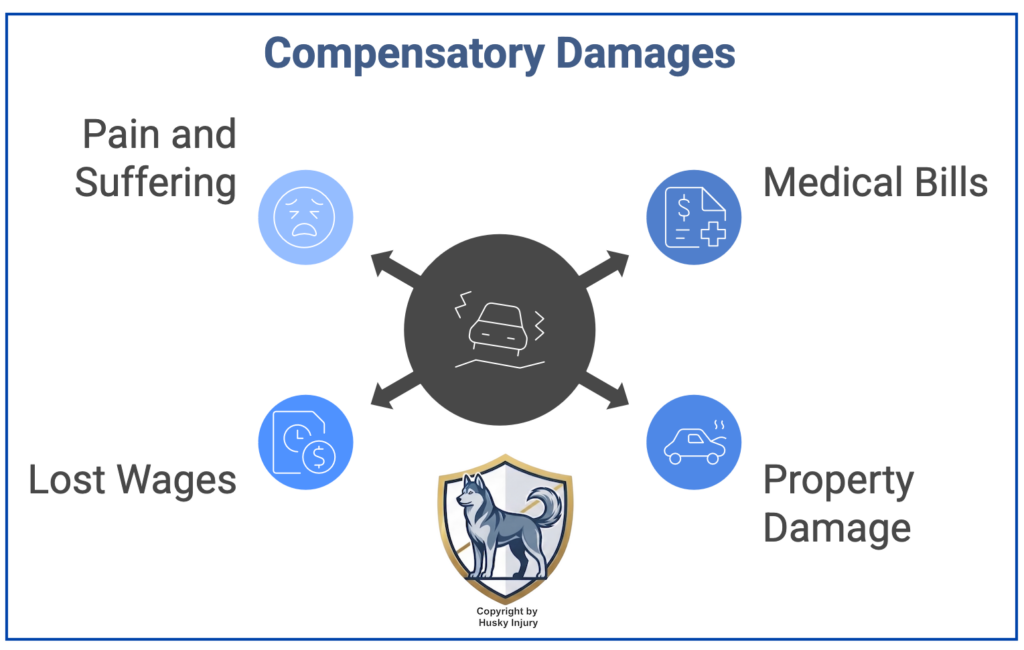
If no fair settlement offer is made, your lawyer can escalate the auto accident case by filing a personal injury lawsuit. This is a formal demand for compensation for what you have lost from the motor vehicle accident, from your medical bills to your pain and suffering and lost wages. It is filed in Nevada state court and gets served on the at-fault driver and their insurer.
With the knowledge and advocacy of an experienced car accident attorney from a reputable law firm, you can maximize the settlement offers that you receive. Your lawyer will also reduce the stress and anxiety of pursuing your rights on your own.
Penalties for Driving While Using a Cell Phone
Starting in 2023, Nevada’s laws against using a handheld device while driving make it a civil infraction. This is a traffic ticket, not a criminal offense. It used to be a criminal misdemeanor, but the law was changed to reduce the penalties. The penalties for driving while using a handheld cell phone in Nevada are:5
| Number of Offenses in the Last 7 Years | Civil Penalty | DMV Demerit Points |
| First offense | $50 | 0 |
| Second offense | $100 | 4 |
| Third or subsequent offense | $250 | 4 |
If the violation occurred in a work zone, the civil penalty is doubled.6
Additionally, your car insurance rates will increase.
If you get 12 or more demerit points on your driver’s license in a year, you will face a license suspension of 6 months.7
Frequently Asked Questions
How can I prove the other driver was texting when they hit me?
Evidence that a driver was texting can include cell phone records, the police report, eyewitness testimony, admissions by the driver, photographs or video footage, and other evidence showing the driver was using a phone at or near the time of the crash. Nevada law generally prohibits a driver from manually typing, sending, or reading electronic communications on a handheld wireless device while operating a motor vehicle.
In our experience, distracted drivers do not always admit that they were looking at their phones. We look for evidence beyond what the driver says, including witness accounts, statements made at the scene, available video footage, and phone-related evidence that may help establish what the driver was doing immediately before the collision.
Do I need the other driver’s cell phone records to bring a lawsuit?
No. Cell phone records can be important evidence in a distracted-driving case, but they are not necessarily required to establish negligence. Liability may be proven through the circumstances of the collision and other available evidence, including witness testimony, police reports, video footage, admissions, and physical evidence from the crash.
We have found that injury victims sometimes assume they have no case because they cannot personally prove the other driver was texting. That determination should not be made based on the evidence available to you immediately after the accident. An attorney may be able to uncover additional evidence as the claim or lawsuit develops.
What compensation can I recover if a texting driver injured me?
A person injured by another driver’s negligence may seek compensation for losses caused by the accident. Depending on the facts, recoverable damages can include medical expenses, lost income, pain and suffering, and other economic and noneconomic losses resulting from the injuries.
From our attorneys’ perspective, one of the most important parts of a distracted-driving case is documenting the full impact of the accident rather than focusing only on the bills that have already arrived. Serious injuries can affect a person’s ability to work, undergo future treatment, perform everyday activities, and enjoy life long after the vehicles have been repaired.
What if the texting driver says I was partly responsible for the accident?
Being partially at fault does not necessarily prevent you from recovering compensation in Nevada. Under Nevada’s modified comparative-negligence rule, an injured plaintiff may recover damages so long as the plaintiff’s negligence is not greater than the negligence of the defendant or defendants. If the plaintiff is partially responsible, the damages awarded are generally reduced according to the plaintiff’s percentage of fault.
In our experience, allegations of shared fault can become an important part of insurance negotiations even when distracted driving appears to have contributed to the crash. We examine the physical evidence, witness accounts, traffic laws, and circumstances leading up to the collision rather than simply accepting an insurer’s allocation of blame.
What if the police did not give the other driver a texting-and-driving ticket?
A traffic citation is not necessarily required to pursue a personal injury claim. A civil injury claim focuses on whether the other driver’s negligence caused your injuries, and liability can potentially be established through evidence other than a traffic ticket.
We regularly caution accident victims against assuming that the police report settles every issue in an injury case. Officers generally arrive after the collision has occurred and may not have access to all of the evidence that can later be obtained. The absence of a distracted-driving citation does not, by itself, tell us whether there is evidence that the driver’s phone use contributed to the crash.
What if I did not realize I was injured until after the accident?
You may still be able to pursue compensation if symptoms appear or become more noticeable after the collision. A personal injury claim generally requires proof that the defendant’s conduct caused your injuries, so medical evidence connecting the injury to the accident can become particularly important when symptoms are delayed.
Our attorneys have seen accident victims who initially thought they were simply sore and later discovered that their symptoms were more significant than they first realized. We generally encourage injured people to take new or worsening symptoms seriously and to accurately tell their medical providers when the symptoms began and how they have progressed.
Will the texting driver’s insurance company automatically pay because texting while driving is illegal?
No. A violation of Nevada’s distracted-driving law does not mean an insurance company will automatically pay everything an injured person demands. The claimant still has to establish the driver’s liability, causation, and the nature and amount of the damages being claimed. Depending on the circumstances, violating a safety statute may also support a negligence-per-se theory.
In our experience, even cases involving seemingly obvious misconduct can produce disputes over how the crash happened, whether particular injuries were caused by it, and how much those injuries are worth. Evidence of texting can strengthen the liability side of a case, but building a strong damages case is equally important.
What happens if the texting driver does not have enough insurance to cover my injuries?
If the at-fault driver’s liability insurance is insufficient to compensate you fully, other potential sources of recovery may be available depending on the circumstances and the applicable insurance policies. For example, an injured person’s own uninsured or underinsured motorist coverage may become relevant in some cases.
We find that serious-injury cases often require looking beyond the question of who caused the accident and determining what insurance coverage and other potential sources of recovery actually exist. Reviewing the available policies early can help us understand the practical options for pursuing compensation.
Should I give the other driver’s insurance company a recorded statement?
You generally are not required to help the opposing insurance company build its defense against your personal injury claim merely because its adjuster requests a recorded statement. What obligations you may have can depend on the circumstances, including whether you are dealing with another driver’s insurer or your own insurance carrier.
From our attorneys’ perspective, recorded statements deserve caution because seemingly harmless answers can later become points of dispute about how the accident occurred or how badly someone was hurt. We prefer to understand the facts, injuries, and insurance issues before an accident victim gives the opposing insurer detailed statements about the case.
What if the driver was using their phone for something other than texting?
Nevada’s distracted-driving statute is not limited to traditional text messages. It generally prohibits manually typing or entering text and sending or reading data to access or search the Internet or engage in nonvoice communications, including texting, electronic messaging, and instant messaging. Nevada law also generally prohibits handheld voice communications unless a hands-free accessory is used, subject to statutory exceptions.
In our experience, the important question is often not whether the driver was literally sending a “text message,” but what the driver was doing with the device and whether that distraction contributed to the collision. Evidence showing that a driver’s attention was on a phone instead of the road can therefore be significant even when the activity was something other than ordinary texting.
Can I still have a case if the texting driver never admitted using their phone?
Yes. A defendant’s admission is not required to prove negligence. Like other disputed facts in a civil case, distracted driving may be established through direct or circumstantial evidence.
Our attorneys do not expect an at-fault driver to provide all of the evidence needed to prove a case. When phone use is suspected, we look at the driver’s behavior, witness statements, crash circumstances, available recordings, documentary evidence, and other information that may independently establish distraction.
Should I accept a quick settlement offer after a distracted-driving accident?
You are permitted to settle a personal injury claim, but accepting a settlement generally resolves the covered claim in exchange for a release. For that reason, the value of the claim should be evaluated in light of the injuries, medical treatment, lost income, future losses, and other recoverable damages before a final settlement is accepted.
We believe an early offer can be difficult to evaluate when an injured person’s prognosis or future medical needs are still uncertain. Once a claim has been fully released, discovering later that the injury was more serious than expected can create a major problem. We therefore look at both the immediate losses and the likely long-term consequences before evaluating whether an offer fairly compensates the client.